January 1, 2026
Will lifting weights make you bulky? The science explained
Worried that lifting weights might make you bulky? The myths, the truths and the science
One of the most common concerns women have about strength training is the fear of becoming “bulky.” It’s a question that comes up again and again "If I lift weights, will I get big?"
The short answer is no.
The longer answer is worth understanding, because this myth has kept many women from one of the most effective tools for improving body composition, confidence, and long-term health. Let’s break down where the bulky myth came from, what science actually says, and why lifting weights helps women look leaner, not larger.
Myth #1: Lifting weights automatically builds large muscles
The truth
Most women do not have the hormonal environment needed to build large amounts of muscle easily
Building significant muscle size requires very specific conditions, including:
• Heavy training volume
• Very high calorie intake
• Years of consistent, progressive training
• Favorable genetics
• High levels of anabolic hormones
Women naturally produce far less testosterone than men, a key hormone involved in muscle hypertrophy. This is one of the primary reasons men gain muscle size faster and more visibly than women, even when training the same way.
Research published in Sports Medicine shows that while women can gain strength at similar rates to men, increases in muscle size are typically much smaller under the same training conditions.
Myth #2: Light weights tone, heavy weights bulk
The truth
Muscle definition comes from muscle plus fat loss, not from avoiding heavier weights.
Strength training with appropriate resistance helps:
• Build lean muscle
• Increase muscle firmness
• Improve shape and definition
“Toning” is not a physiological process. When trainers use the term toning what they are referring to is the results that come from building some muscle and then reducing body fat so that muscle becomes more visible. Light weights are not inherently better for this. In fact, using weights that are too light often limits progress.
Myth #3: Cardio is better than weights for fat loss
The truth
Cardio burns calories during the workout. Strength training changes how your body uses energy long after the workout is over.
Resistance training:
• Preserves and builds lean muscle
• Increases resting metabolic rate over time
• Improves insulin sensitivity
Studies published in The Journal of Applied Physiology show that strength training increases post-exercise energy expenditure and supports fat loss while maintaining muscle mass.
This is why many women see better body composition results when strength training is included, even if the scale does not change dramatically.
Why lifting weights actually helps you look leaner
Muscle takes up less space than fat
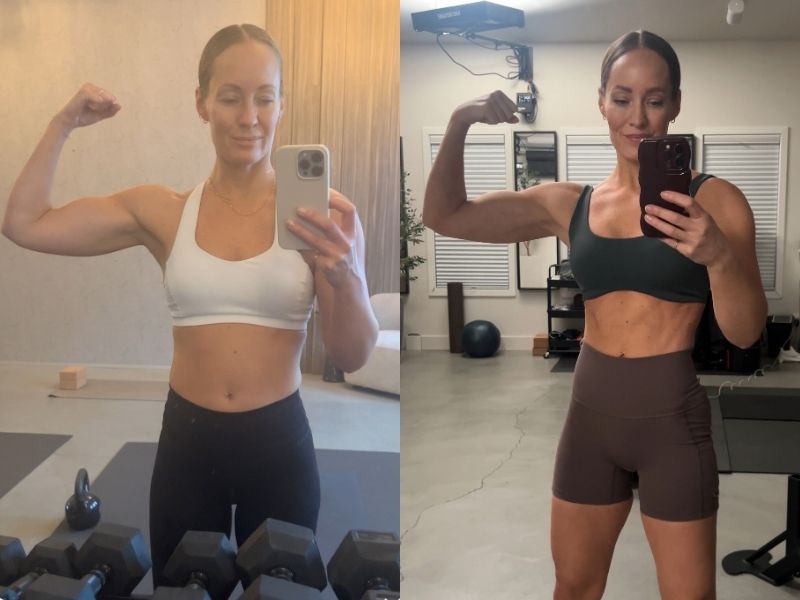
Muscle is denser than fat, meaning it weighs more per volume but occupies less space. As muscle replaces fat clothes begin to fit better, body shape changes and the physique looks firmer and more defined
This process is known as body recomposition, and it is one of the most common outcomes of consistent strength training.
Strength training supports fat loss without muscle loss
Many traditional weight-loss approaches focus only on calorie burning. Without resistance training, weight loss often includes muscle loss, which can slow metabolism, reduce strength and make the body look softer.
Strength training helps ensure that when fat loss occurs, muscle is preserved, leading to better long-term results.
You control how you train
Training style matters. The programs I design (and follow myself) typically emphasize moderate to heavy resistance, controlled volume, balanced recovery and progressive overload without extremes. This approach builds strength, not bulk.
What the research consistently shows
Multiple studies support the benefits of resistance training for women:
• Improved body composition without excessive muscle gain
• Increased fat oxidation over time
• Improved metabolic health and insulin sensitivity
• Higher resting energy expenditure
A large review published in Medicine & Science in Sports & Exercise found that resistance training significantly improves fat-free mass and reduces fat mass in women without leading to excessive hypertrophy.
Why this myth persists
The fear of becoming “bulky” often comes from a mix of misunderstanding and exposure to extreme examples that don’t reflect reality for most women. Images of elite female bodybuilders are frequently used as reference points, even though these athletes train with very high volumes, follow highly specialized nutrition plans, and often spend years intentionally trying to maximize muscle size.
At the same time, decades of diet culture messaging have conditioned women to believe that being smaller is better and that strength training should be avoided rather than embraced. When you combine those influences with a general lack of understanding around how muscle growth actually works, it’s easy to see why the myth has stuck around. In practice, most women who strength train consistently and sensibly build strength, definition, and confidence, not excessive muscle size.
The real benefits of lifting weights for women
The benefits of lifting weights go far beyond aesthetics. Strength training supports bone density and joint health, helping protect the body as it ages and reducing the risk of injury. It builds the kind of functional strength that makes everyday movements—lifting, carrying, climbing, and bending—feel easier and more controlled. Over time, it also increases confidence and body awareness, allowing women to feel more capable and connected to what their bodies can do.
Perhaps most importantly, strength training helps preserve independence as we age, making it one of the most protective and empowering forms of exercise women can do long term.
The bottom line
Lifting weights will not make you bulky. It will make you:
✔ Stronger
✔ Leaner
✔ More confident
✔ More resilient
When paired with balanced nutrition and smart programming, strength training is one of the most effective ways for women to improve body composition and feel good in their bodies.
Programs inside the Heather Robertson app are designed to build strength and definition without extremes - join today and take the guesswork out of proper programming. All you need to do is press play and follow along!